The Last Tailor of Lower Broad
Manuel Cuevas is ninety-three. He still cuts every suit himself. A morning in the workshop with the man who made country music wear its clothes.
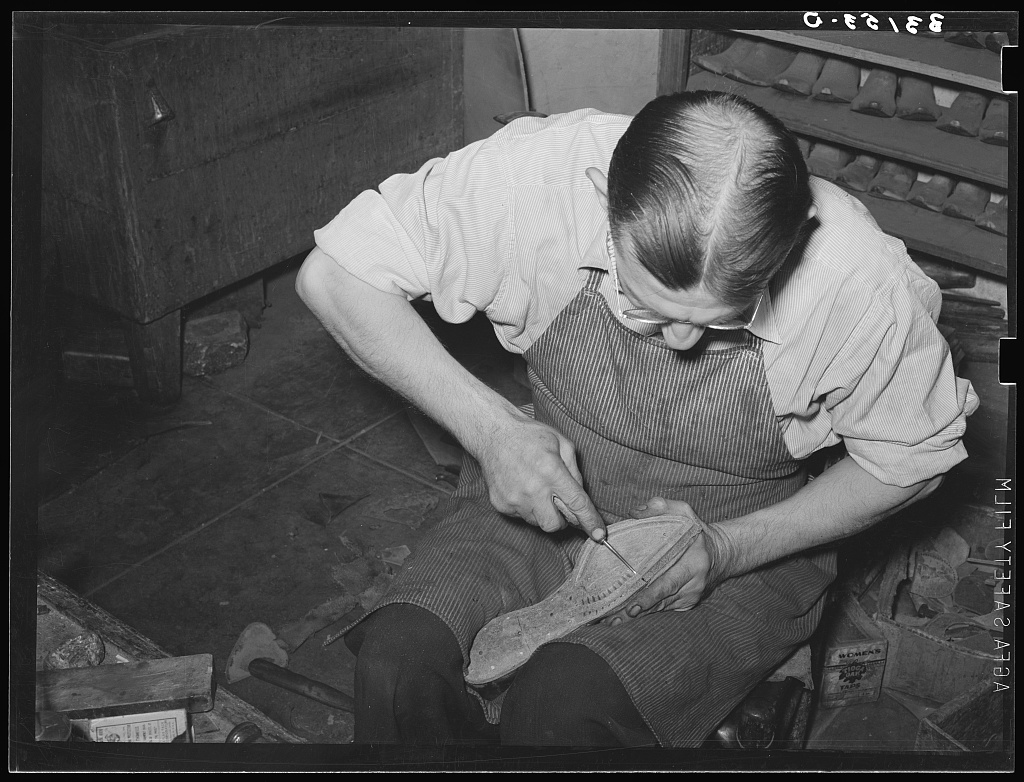
He works from a stool at the back of the room. Ninety-three years old and he still cuts every suit himself. His glasses sit at the end of his nose. His scissors do not stop.
The light comes through one window. The radio is on a station that has been playing the same set of George Jones records since 1974. There are five suits hanging on a rack by the door, three for a country singer whose name you would know, two for a man Manuel has never met but whose check cleared. The names do not matter. The thread count does.
"You see this?" he says. He holds up a piece of black wool. "Eighteen ounces. They do not make this anymore. I bought all of it. All of it."
He is talking about a roll of fabric he purchased in 1989 from a mill in Italy that closed the following year. He has been working out of the same roll for thirty-seven years.
The First Suit
The first suit he ever cut for a famous person was for Hank Williams. He was twelve. His uncle owned a tailor shop in Coalcoman, Mexico, and a man came in with a fistful of dollars and a request. The uncle was drunk. Manuel cut the suit. The man liked it. The man's name was not actually Hank Williams. The man's name does not matter. The suit does.
Some people say he made the suits famous. He made the famous men into something more.
That story is mostly true. The dates do not quite line up. Manuel was born in 1933 and Hank died in 1953, which would have made Manuel twenty, not twelve, and there is no record of Hank visiting Coalcoman. But the story has a kind of truth that resists timelines. Manuel will tell it the same way the next time you ask. The story is not the point. The suit is.
The Workshop
The studio is a single room on a side street off Lower Broadway. There is no sign. The door is painted the same red as a 1948 Ford pickup. Inside, every surface is covered in fabric, thread, rhinestones, and the rare object that does not belong: a coffee cup from the Loveless Cafe, a photograph of Manuel and Johnny Cash from 1968, a wooden box of buttons that Manuel says came from the estate of a tailor named Nudie Cohn.
The rhinestones come in by the gross. Twelve gross to a case. Manuel uses an average of eighteen gross per suit. He does the math on the back of envelopes. He keeps no records.
"They want me to write it down," he says. "I do not want to write it down. If I write it down, somebody else can make the suit. If I do not write it down, only I can make the suit."
This is not paranoia. This is sixty years of seeing what happens when craft gets documented. When the suit becomes a pattern. When the pattern becomes a product. When the product gets manufactured in a factory in Vietnam and sold at a Western wear chain that did not exist five years ago for sixty-nine dollars and ninety-five cents.
The Last Generation
He has never taken an apprentice. He has been asked. He has refused. "What I do is not a job," he says. "It is a way of looking at fabric. You cannot teach that. You can teach the cutting. You cannot teach the looking."
When you ask him what happens to the workshop after he is gone, he shrugs.
"It goes."
The Suit on the Rack
Before we leave, he holds up a jacket. The wool is the eighteen-ounce black from the closed Italian mill. The lining is red silk from a roll he bought in Mexico City in 1971. The buttons are bone, hand-carved in his uncle's workshop in 1962 and shipped to him in a box after his uncle died.
The jacket is for a singer who is twenty-eight years old and selling out arenas. The singer has been to the workshop three times. The singer cried the first time he put the jacket on.
"He understands," Manuel says. "Not all of them understand. He does."
He puts the jacket back on the rack. He sits down at his stool. He picks up his scissors.
The radio plays "He Stopped Loving Her Today." Manuel does not sing along. He never does. He just cuts.
The editorial voice of country and Western fashion. Written by the editors of Boot & Brim.
The Cowboy Carter Ledger
Beyonce's country album dropped in March 2024. Here is the ledger on what it did to the closet, eighteen months in.
Why the Pearl Snap Won
The button gave way to the snap because of a horse. A short history of the most copied detail in Western wear.
The Tecovas Question
Two hundred and fifty million dollars in revenue. A SoHo flagship. A target of one billion by 2030. What happened when the cowboy boot got an MBA.