The Tecovas Question
Two hundred and fifty million dollars in revenue. A SoHo flagship. A target of one billion by 2030. What happened when the cowboy boot got an MBA.
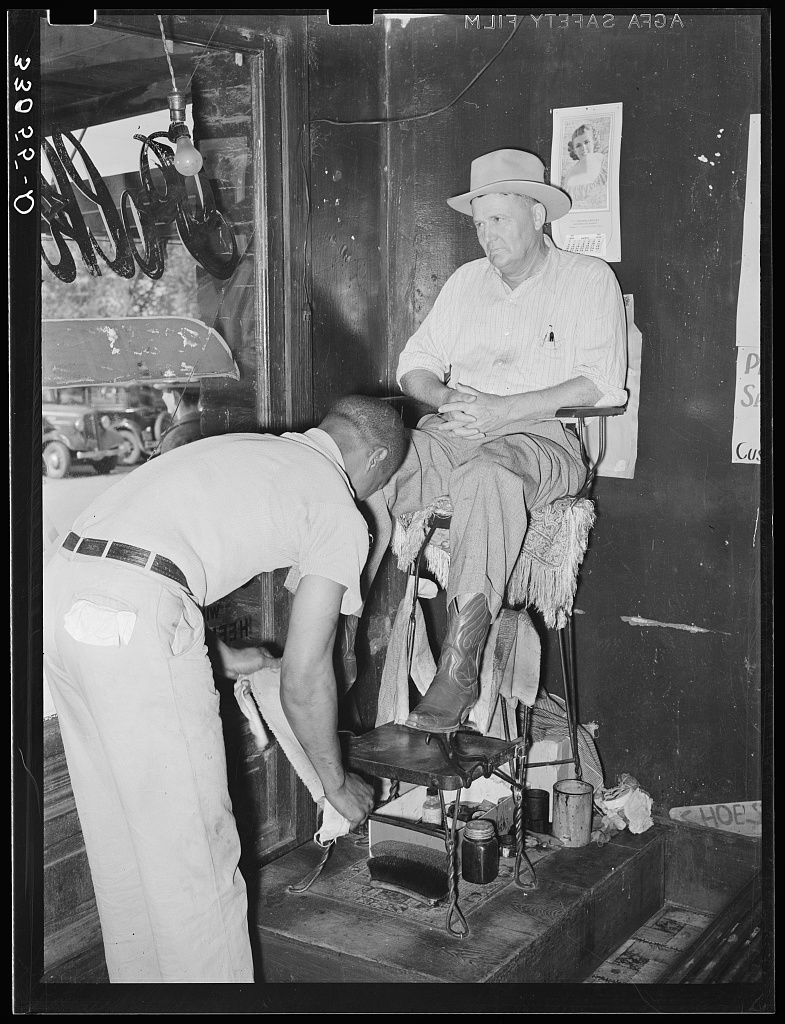
The first thing to know about Tecovas is that the boots are good. This needs to be said up front, because everything else in this story complicates it, and the easiest version of the argument is one in which the boots are not good and the whole thing is a triumph of marketing over substance. That is not the argument.
The boots are good. They are not the best boots. They are not the boots that a fifth-generation Mexican bootmaker would put on his daughter's feet. They are not the boots a working ranch hand in Marfa wears to break colts. But they are good. The leather is good. The lasting is good. The price, considering the leather and the lasting, is good.
This is the problem.
The Numbers
Tecovas crossed two hundred and fifty million dollars in annual revenue in 2024. They opened their fiftieth store in August of 2025, a flagship in SoHo. They are targeting one billion in revenue by 2030. Their first hundred-million year was 2021. Eighty percent growth that year. They are the fastest-growing Western footwear brand in American history, possibly in the global history of the category.
Two hundred and fifty million in revenue. A SoHo flagship. A target of one billion by 2030.
For context: Lucchese, which has been making boots since 1883, does an estimated seventy-six to eighty-eight million in annual revenue. Tecovas is now larger than Lucchese, larger than Stetson at the corporate level, and on track to be larger than Wrangler's Western footwear segment within three years.
The category did not have room for that growth. The category had to be made.
The Made Category
When Paul Hedrick started Tecovas in 2015, the standard cowboy boot in America cost between four hundred and six hundred dollars at retail. Anything below that was discount. Anything above was custom or heritage. The market was bimodal: rodeo cowboys at the bottom and oil money at the top, with a thin band of suburban dads in the middle.
Tecovas priced their boots at two hundred and thirty-five dollars. Then two-fifty. Then two-eighty-five. Always under three hundred. Always higher than the Ariat at the rodeo supply store, lower than the Lucchese at the Western shop.
The price was the entire strategy. The boots had to be good enough to justify the price. The brand had to be coherent enough to justify the boots. The customer had to be the kind of person who would have bought a Lucchese if they were forty and did not have a Lucchese yet.
What Tecovas understood, that no one else in the category understood, was that the customer existed in numbers. There were millions of people who liked the idea of cowboy boots and did not own them because the category felt closed. Tecovas opened it.
The Critique
I called a bootmaker in Nashville whose name I cannot use because he asked me not to. He has been making custom boots for forty-one years. He charges twenty-four hundred dollars and starting. He has a waitlist.
"They are good boots," he said. "They are not boots that will be passed down. The lasting will hold for ten years. A boot of mine will hold for forty. That is not a knock on Tecovas. That is the math of what they cost to make versus what they cost to buy."
"They are good boots. They are not boots that will be passed down."
I called a longtime Lucchese fitter, who also asked not to be named. He has worked at the same store in Texas for twenty-six years.
"The Tecovas customer is a Lucchese customer who does not know they are a Lucchese customer yet," he said. "Some of them come in here a few years after they buy their first Tecovas. They buy a Classico. Then they buy a Limited. Then they stop buying Tecovas. That is fine. That is the boot market. It always was."
The Tecovas response to this is roughly: we are happy to be the boot people buy first. The boot people buy first is a category that did not exist in 2014. They invented it.
The SoHo Question
The SoHo store changed something. When Tecovas was selling boots online from Austin and opening stores in Houston and Dallas and Nashville, they were a Western brand expanding regionally. When they opened in SoHo, on Spring Street, two blocks from Madewell and three blocks from Khaite, they became something else. They became a fashion brand.
A fashion brand is not the same as a Western brand. A Western brand sells to the audience that has always bought Western. A fashion brand sells to the audience that wants to look the way someone in the Western audience looks. The audiences overlap but they are not the same.
What Tecovas is now is a fashion brand that started as a Western brand. This is not a trick. This is the trajectory. Ralph Lauren did it. Levi's did it. The American story keeps doing it.
The question is what gets lost.
What Gets Lost
Here is what is not lost: the boots are still made in the same factories in Leon, Mexico, that have been making cowboy boots for a hundred and twenty years. The leather is still sourced the same way. The lasting is still hand-pulled. The bootmakers Tecovas works with are real bootmakers.
Here is what is at risk: the cultural specificity of the boot. The thing that makes a cowboy boot different from a chukka or a Chelsea. The pointed toe that was designed for stirrups. The two-and-a-half-inch heel that was designed to hook on a horse. The pull tabs on the inside of the boot tops that were designed for one purpose, which was to pull the boot on when you were tired and the leather was stiff.
When the cowboy boot becomes a fashion boot, those details become decorative. The pointed toe is shape. The heel is height. The pull tabs are branding. The boot still looks like a boot. The boot is no longer for what the boot was for.
This is what gets lost. Not the craft. Not the leather. Not the lasting. The reason.
The Verdict
I own Tecovas. I have owned three pairs. Two are in regular rotation. One I gave to my brother-in-law for Christmas. I will buy another pair this year. The boots are good.
I also own one pair of Lucchese, which my father bought for me when I was twenty-two. I have had them resoled twice. I will have them resoled again. They will outlast me. They will not outlast the brand.
Tecovas, in its current form, will not exist in the same way in twenty years. It will be acquired or it will go public, and either way, the boots will start to change. The leather will get thinner. The lasting will get faster. The price will hold for another decade and then it will start to climb, slowly at first and then all at once.
When that happens, the boot people buy first will be a different boot. The Tecovas customers of 2026 will buy Lucchese. The Lucchese customers will buy custom. The custom bootmakers will be busy. The cycle will repeat.
That is the boot market. That is what Tecovas understood. That is why two hundred and fifty million was always going to be possible. That is also why one billion, if they get there, will not be the end of the story. It will be the start of the next one.
The editorial voice of country and Western fashion. Written by the editors of Boot & Brim.
The Cowboy Carter Ledger
Beyonce's country album dropped in March 2024. Here is the ledger on what it did to the closet, eighteen months in.
The Last Tailor of Lower Broad
Manuel Cuevas is ninety-three. He still cuts every suit himself. A morning in the workshop with the man who made country music wear its clothes.
Why the Pearl Snap Won
The button gave way to the snap because of a horse. A short history of the most copied detail in Western wear.